
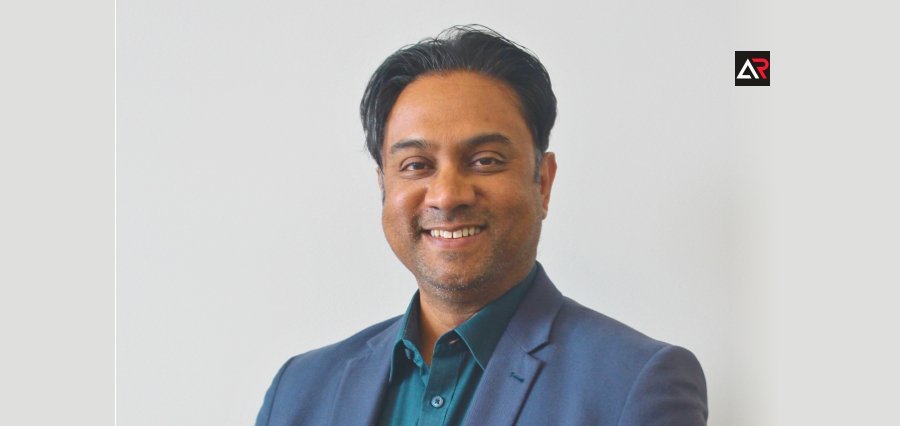
Everything evolves. However, in socio-economic-business parlance, it is the most influential leadership that defines, decides, guides, and shapes the nature of change, while redefining the meaning of transformation. At the precipice of this transformation, especially when it comes to South Africa, leaders like Vishaal Lutchman―as the Group CEO of GIBB―hold the key to a better tomorrow.
There is a reason behind it. The saga of Lutchman is a journey full of unique experiences that shaped his own path to leadership in engineering and infrastructure. He experienced the effects of institutionalized discrimination in the country and observed that many people lacked the same access to sustainable livelihoods as others. He saw the poor state of infrastructure afforded to those who needed it most and recognized the need to bridge the stubborn inequality gap, which is why he chose the career of a civil engineer.
The more he worked in the field, the more he felt compelled to do better, to help provide infrastructure that was fit for purpose and that generated revenue for the country so that these funds could be used to enhance the lives of the most vulnerable. He did not anticipate the level of malfeasance he would see in the country over the past decade, which has also had a negative impact on the lives of its youth. This led him to focus on growing young talent through various initiatives at conferences, webinars, youth summits, and through thought leadership articles and postgraduate studies.
Holding senior roles across the infrastructure sector, Lutchman’s personal principle is the application of knowledge to support the communities within which he works. He adopted a systems-thinking approach to embrace the prevailing complexity, believing in the interconnectedness of things. When he worked for Transnet, he knew that creating infrastructure meant a stronger organization and a stronger economy. His roles in the private sector focused on providing ethical services to clients, building teams, and empowering those coming through the system to become effective leaders.
A strong, values-and-principles-based mindset allows him to navigate difficult and complex problems. It entails lifelong learning to see the world as others see it and avoid obsolescence. Lutchman’s final personal principle is to work towards a sustainable infrastructure ecosystem that advances sustainable communities in the country and on the continent. Pan-Africanism has been with him for many years, and he works to change paradigms and narratives to enable African communities to prosper as a collective, breaking through the colonial economic shackles that exist at the moment.
GIBB operates at the intersection of engineering excellence and socio-economic transformation. Its ideology resonated with Lutchman when discussing his alignment with the firm. “I enjoyed the socio-economic intent of the business’s brand essence, which is not common and often not lived by professional services firms. The conversations in the firm match its branding, something I have not historically observed.” GIBB lives its brand both the teams and its clients.
Navigating a Complex Concept in a Challenging Terrain
Leadership, according to Lutchman, is a large concept and a complex one at that. “We do not have an Africa Inc. approach to development.” Hence, each jurisdiction is still planning separately. There is no integration in planning for the overall development of the continent. “As altruistic as it may seem, collectivist planning is the right thing to do so that we leverage skills, resources, and needs.” African ideologies are still very much driven by colonial infrastructure and trade links. In addition, many leaders do not have a long-term growth approach, and regime changes are disruptive and often ego-driven, which is a dissonant leadership attribute. Building a new economic framework for Africa is hard, community demands are high, and the election cycles are short, which does not help one to keep to a plan.
Many geographies manipulate procurement processes – one wonders why there are such processes when it is well known that the firm that delivers value is not the firm to be shortlisted or awarded the work. “I would disclaim the statement by saying that those geographies that do not wish for the best quality services tend to have higher levels of corrupt practices.”
The role of a leader is to empower new leaders, but this is not common. So, infrastructure development, which is becoming increasingly complex, is not dealt with accordingly. Complexity is avoided, and decisions taken are not always understood and supported by constituents, or are generally not holistic enough to create sustainable communities. The concept of a sustainable community has yet to be framed.
“I believe that leadership must be fit for purpose. In the case of Africa, this means we need socio-economic growth that is sustainable so that communities can thrive.” Many leaders do not seem to act in the best interests of society, so problems remain unsolved. In contrast, new problems are created, such as sovereign debt: a chronic illness on the continent informed by bad decisions, corruption and theft of public funds, unsustainability, growing inequality, hunger and poverty, to name a few. The narrative cannot continue, or else we risk losing what we have. Geographies with significant access to funding are ever willing to buy into Africa’s crown jewels.
Elitism is not an effective leadership attribute in the true sense. Still, it motivates the decisions taken to provide infrastructure, as there are benefits to the connected few at the expense of the disconnected many. In summary, leadership changes have to happen, and leaders need to lead the people they represent and be able to meet the demands of the people successfully. We have already given much away in the form of consumerism at the expense of production. Our production capability is reducing rapidly, with no apparent attempt to protect such industries. Policy to promote industrialization takes significant leadership, as leaders will need to make decisions that counter the current production trends actively.
Putting His Heart in GIBB
Lutchman joined GIBB a few months ago and has observed that it has a strong foothold in the country and clients appreciate the work done, making his decision to join easy. “GIBB has an attractive culture that I was drawn to and a reputation that precedes it in a few market segments.”
His approach is to double the business in the remaining period. The growth is motivated by presenting GIBB to the market as a partner that is grounded in ethics and professionalism – “Experiences our clients will feel when we are delivering the projects.”
Lutchman intends to focus on talent growth and talent empowerment, with a special focus on growing future leaders in the organisation. “I will also focus on keeping corporate costs as low as possible to enable operational efficiencies and improved ROI. There are certain investment areas we have moved on to expand market share and enter new markets with new clients.” All is done in the interests of our people and our clients to ensure that we keep clients as sustainable as possible, to ensure the sustainability of GIBB.
Some milestones that resonate with him are the new energy that comes with having a new leader. “This, while leveraging the work already done by our previous GCEO and now executive chair of a supportive board, who has created a solid foundation that the business can build on. His leadership resonates with mine, so we are often aligned in the way we would like to see the business grow.”
“Our digital transformation team is focused on improving the way we work through careful adoption of digital tools aimed at transforming the business in the next 12 to 24 months,” adds Lutchman.
A Different Perspective
Moreover, when it comes to balancing two things simultaneously―driving innovation with maintaining the trust and integrity that GIBB has long been known for, Lutchman doesn’t think the two concepts are mutually exclusive. He says this because GIBB has a significant legacy in the country and the continent. That legacy is true and is a fact. Innovation is an evolutionary concept and is a phenomenon in engineering and other industries that changes with time. He refers to scale rule, computers, and computer-aided design, which can all be lumped under the umbrella of innovation. Today, it’s no different except that the rate of change is faster – in the past, one would be using similar tools and processes as one’s boss, who would then be able to guide you.
“Now, the rate of change is so fast that our leaders are not familiar with the latest technology available.” Many youngsters will want to adopt new technologies, and often, leaders will drag their heels in authorizing the use of such technologies due to a lack of understanding. “Therefore, innovation will always play itself out, and the decision we need to take is – when, how much, and who to invest in and with which technology provider. There are some uncertainties; however, we will never compromise the trust and integrity of our services.” It is time that technology should be homegrown and owned, as we have the skills to do so.
A Transformation Based on Four Pillars of Sustainability
Lutchman has been a vocal advocate for transformation and empowerment in the engineering space. When asked what meaningful transformation looks like to him, beyond compliance and quotas, he says, “I have focused on transformation based on four pillars of sustainability.”
Social transformation must come from inclusive economic growth and the provision of services.
“Cultural transformation is woven into the way we plan infrastructure for communities.” The current housing projects often ignore the cultural aspects, such as community halls, play areas, religious facilities, and green areas.
“Financial transformation is the reconfiguration of how we plan and provide infrastructure.” “We have not yet moved away from what I would refer to as old ideologies that do not address current issues such as youth unemployment.” The effective training of youth can be linked to the provision of municipal maintenance.
He explains that there are skills to give young people the ability to commence with businesses that serve communities. The country has a significant infrastructure backlog, “Which we lament that infrastructure is not looked after, which sits with the leadership of the day. In addition, we are no longer transforming education as fast as is necessary, as many problems that were simple in the past are now complex due to the dire situation communities currently find themselves in.” Acknowledgement of such complexities will give one the opportunity to work with them, and there are modern interdisciplinary approaches that can be used to address problems.
Gender transformation in the infrastructure ecosystem is spoken about a lot, “But we have not yet transformed the procurement to support only women-owned businesses or youth-owned businesses. We need transformation in the leadership space to rid ourselves of corrupt officials who do not wish to comply with the spirit of the constitution and the need for reparations.
A transformed society from Lutchman’s perspective, values humanity, nurtures women and children, has a sub 5% unemployment rate, zero hunger, healthy communities that feel they own and are part of this great country, crime that is managed, municipal services that have a three-hour turn-around on faults, embracing diversity in all forms and honest leaders who acknowledge the merit of an education system that thrives technologically. Waiting years to resolve a billing issue tells of a failure, allocation of homes tells of failure, death in hospital entry ways tells of failure, and lack of lower grades students unable to read with meaning tells of failure. There are many more.
Putting People at the Heart of Every Project
However, on a pleasant note, Lutchman says the GIBB group is already oriented in a way that even in a technical and outcomes-driven industry, the company ensures that people, teams, communities, and clients remain at the heart of every project. The technical outcomes are nothing new to GIBB and the industry at large, as it is a daily job. The EXCO sessions and engagements with the teams, the leadership teams speak the language of the clients and the user clients. “Sometimes, our strong focus on delivering technical excellence can mean we take our role so seriously that we risk not fully meeting certain client expectations. This stems from the passion of our technical teams, who are always striving to achieve the very best outcomes for our clients, even if it occasionally comes at GIBB’s own expense.”
The current regime, however, is hurting trading as firms do not have the capacity to procure, some with little work, very low price points out of desperate bidding, and a drop in quality. While clients may accept inferior work, the country cannot afford inferior assets, as newer assets are often less durable than the old. “I would recommend clients park the lowest price approach and consider value, which is the prime purpose of having a procurement process that has been converted into a lowest price process.
Prioritizing Sustainability Goals Differently
Internally and externally, Lutchman has spoken at length on the concept of sustainability. “It is interesting that South Africa has not fused sustainability as a key component in all that we do. We have leaders in this space who are not effective but hold on to the concept that not much will happen.”
He continues that their biggest issue is the growing number of unsustainable households and communities due to socio-economic decline. It is a difficult conversation within GIBB. “I use the ideology of: what are we in control of? I regularly advise the team that we need to do the best work possible and as fast as possible so that the work can transition to construction and be commissioned as fast as possible. I challenge the future leaders in GIBB to think about how they will experience sustainability in the business and the communities.”
He encourages volunteer work from all the staff in the business to give back as much as possible. He encourages study in the field so that his company can frame the definition of sustainability for itself. He creates awareness on various conference platforms that sustainability in developed and emerging economies is different and that the Sustainable Development Goals must be prioritized differently.
Creating a Holistic Future for Everyone
Looking ahead, Lutchman’s excitement comes in the form of opportunity, hope, and warmth that a culture provides in a caring nation. “I believe these attributes to be true. We have been washed with poor leadership for many years, and through GIBB and other like-minded organizations, we can keep hope alive and make a difference to the lives of our people. We have much to learn, teach, nurture, and bring everyone along in a journey towards prosperity. For far too long has the continent used its people for disreputable gains.” He adds that his role in whichever shape or form will remain true to the values outlined in this article in any space that he is in. “For now, my heart remains with GIBB.”
Finally, when he reflects on his impact as a leader, Lutchman hopes his legacy will be that of care for the youth of this country; care for the vulnerable people; supporting the concept of aggressive learning; effective leadership towards leading teams to prosper within organizations; disregard for toxicity and leaders who damage teams; tireless work ethic towards the cause; a permanent learner; and taking as many people along with him as possible, all whilst growing GIBB to be better every day.
Arab Africa Outlook wishes the best of luck to Vishaal Lutchman in achieving everything he wishes for.