
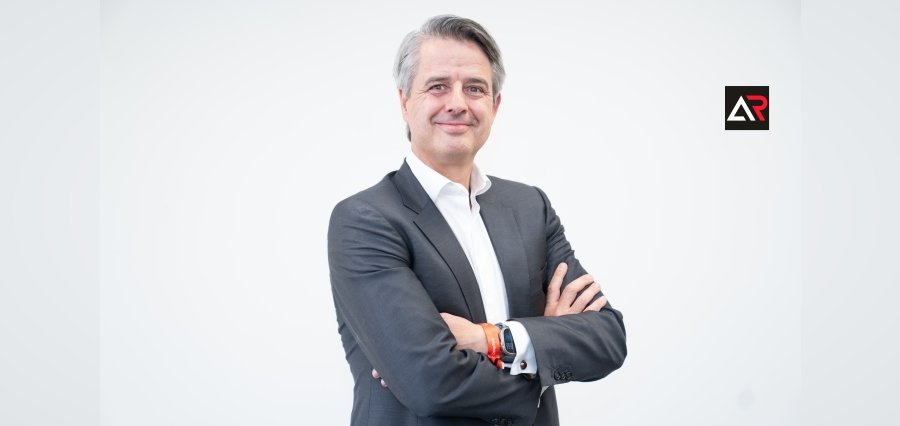
Space is no longer just about exploration — it’s becoming a vital part of how countries secure their future, innovate, and build sustainable economies. At the heart of Saudi Arabia’s bold space ambitions is Martijn Blanken, the CEO of Neo Space Group. With decades of experience in telecommunications and digital infrastructure, Martijn is now steering this national space initiative with a clear focus on turning big-picture goals into real-world solutions.
Neo Space Group is making its mark by using the latest satellite technology to solve real problems—whether that’s helping airlines stay connected, making city planning smarter, or keeping an eye on the environment. Their difference lies not only in the tech but in how they bring together global insights and local priorities, empowering Saudi talent and playing a key role in turning the nation’s big dreams into reality.
Neo Space Group is driving forward with cutting-edge satellite communications and smart geospatial services, but their mission goes well beyond space itself. They’re focused on creating meaningful, positive changes here on Earth. Martijn and his team are tackling the complex challenges of the space industry, turning innovative ideas into reality, and building a resilient, sustainable space ecosystem that will benefit generations to come.
Let’s dive into this interview to discover how Neo Space Group is turning space innovation into real impact for Saudi Arabia’s future!
Can you start by telling us about your journey and what led you to lead Neo Space Group?
My career spans over 25 years across the telecommunications and digital infrastructure sectors, including senior leadership roles at Telstra and EXA Infrastructure. I’ve had the privilege of leading large, complex organizations through periods of significant transformation and growth.
What drew me to Neo Space Group (NSG) was the once-in-a-generation opportunity to help build something truly national in scale and purpose. NSG is not just a space company, it’s a strategic enabler of Saudi Arabia’s long-term aspirations in technology, sustainability, and security.
Leading this organization is both an honor and a responsibility I take very seriously. At NSG, we believe space is not only about exploration, but also empowerment. Our mission is to transform the Kingdom’s space ambitions into actionable capabilities that address real-world needs, today and for generations to come.
How did Neo Space Group come into existence, and what core opportunity in the space sector are you addressing?
NSG was established by the Public Investment Fund (PIF) with a clear strategic mission: to become Saudi Arabia’s national space champion. The space sector represents a vital frontier for sovereignty, innovation, and economic resilience. At NSG, we are focused on building advanced, sovereign capabilities in Satellite Communications, Geospatial, Positioning, Navigation & Timing (PNT) services, and space-based analytics. These capabilities are not only critical for national security, but also central to driving economic diversification and enabling sustainable development in alignment with Saudi Vision 2030.
What were the primary areas of focus for Neo Space Group in 2025?
In 2025, our focus is anchored around four strategic domains:
- Satellite Communications: NSG offers government and enterprise secure, high-throughput satellite communications services, through our network of satellites, with an initial focus on next-generation in-flight connectivity services for airlines.
- Geospatial: Capturing high-resolution data and building Earth Observation platforms to transform that raw data into actionable intelligence for key sectors. NSG’s data services will enable smarter decision-making and serve critical sectors of the Kingdom’s economy.
- Positioning, Navigation & Timing Services: NSG will deliver a comprehensive suite of PNT solutions essential for navigation and location-based applications, including Satellite-Based Augmentation Systems (SBAS), Global Navigation Satellite Systems (GNSS), geofencing, and enhanced navigation services.
- Venture Capital: NSG will launch a Global Space Venture Capital Fund aimed at supporting thriving space ecosystems also supporting national talents and SMEs.
These business units, particularly our geospatial services, had a positive impact across multiple sectors. Saudi Arabia’s space economy is projected to reach $31.6 billion by 2035, 1 and NSG is working closely with the Communications, Space & Technology Commission (CST), and the Saudi Space Agency (SSA) to leverage these space technologies and contribute to the economic growth of the Kingdom. Some of the key areas where space will support Vision 2030 include high resolution satellite imagery for planning in urban development and tourism for giga projects like NEOM and Red Sea tourism; satellite-based geological data for mining and energy exploration; earth observation data for sustainability and agriculture projects; reliable satellite connectivity to power AI and Industry 4.0 projects at industrial sites; and secure communications and surveillance for national security.
Can you highlight any breakthrough technologies or solutions currently being developed by your team?
At NSG, one of our most successful areas of operation so far has been in the field of satellite-based In-Flight Connectivity. We are developing an award-winning next generation, IFC solution that combines multi-orbit satellite coverage with intelligent bandwidth management. Through our partnership with Display Interactive (DI), we have announced the Skywaves satellite connectivity system and SkyFly end-user portal, both of which are set to transform the in-flight passenger experience. The Skywaves tailored traffic management platform enables airlines to intelligently switch between multiple IFC networks on-the-fly, ensuring that their passengers can always stay connected.
We have also partnered with global satellite communications operator SES to bring the SES Open Orbits™ In-flight Connectivity network to the international airlines market. In addition, we have formed a strategic partnership with G&S SatCom, a leading satellite solutions provider, to implement the G&S SatConnect® monitoring platform, which supports our Network Operations Centre (NOC) in monitoring and managing in-flight services at a high level of precision and reliability. NSG has a growing portfolio of airline customers for these services, including three global airlines – Thai Airways, Turkish Airlines and Uzbekistan Airways.
On the geospatial front, we’re investing in AI-powered Earth observation technologies that extract actionable insights from satellite imagery. These capabilities support a broad range of applications, from monitoring land use and environmental changes to enhancing decision-making in agriculture, urban planning, and disaster response.
Recently, Neo Space Group (NSG) announced the launch of the Earth Observation (EO) Marketplace – the Kingdom’s first dedicated platform for EO data, powered by UP42, a wholly owned NSG company. The platform is designed to meet the growing demand for advanced EO and geospatial data solutions and is expected to significantly expand data availability across key sectors, including environment, infrastructure, energy, real estate, mining, transportation, logistics, agriculture, and more.
How is Neo Space Group approaching sustainability and responsible space operations?
Geospatial technology plays a vital role in advancing sustainability. Our Earth observation capabilities provide real-time insights that support environmental monitoring, efficient natural resource management, and climate resilience efforts. Our solutions empower governments and industries to make data-driven decisions that drive long-term sustainability.
NSG’s In-Flight Connectivity (IFC) services also contribute to sustainability by supporting aviation industry efforts to optimize flight routes using real-time data streaming to and from aircraft to make dynamic adjustments to flight plans for improved fuel efficiency.
What strategic partnerships or collaborations are driving your innovation efforts?
NSG believes in combining global expertise with local insight, and as such we have established strategic partnerships with leading aerospace manufacturers, satellite operators, and AI firms. For example, we have a strategic agreement with ESRI, the global leader in Geographic Information System (GIS) software, location intelligence, and mapping, to collaborate on geospatial innovation. We have also partnered with SuperMap Software to enhance technological capabilities and strengthen GIS-based solutions.
In addition to partnerships, we are expanding our business through acquisitions. NSG recently acquired UP42, the next-generation Earth observation platform from Airbus. Through UP42, we offer access to over 80 different Earth observation datasets from a wide range of providers, consolidating geospatial insights into one unified platform for our customers.
At the national level, we are collaborating with King Abdullah University of Science and Technology (KAUST) – to co-develop advanced Earth observation applications. We are engaging with local startups, research centers, and global development agencies to amplify the societal and economic impact of our technologies.
What are the biggest challenges you’re currently facing, and how are you overcoming them?
The space sector is fast-moving, highly competitive, complex and capital-intensive, and to address the challenges of becoming Saudi’s space champion, NSG is taking a phased approach to building out capabilities and leveraging our strategic partnerships.
At the same time, we are investing significantly in developing a local talent pipeline, which will mean NSG can continue to grow using Saudi expertise, building our long-term resilience.
Our talent development approach includes four key pillars: Structure Talent Programs through initiatives like the Space Academy in collaboration with the National Institute of Technology (NITA), that build industry-ready skills; knowledge transfer and reskilling to uplift Saudi talent in areas such as space systems engineering and mission operations; alignment with the National Workforce Goals and National Skills Platform; and STEM education outreach, through collaborations with the Saudi Space Agency, the Ministry of Education, the Mawhiba initiative and KAUST’s Industry Collaboration Program.
In addition, NSG has partnered with the Communications, Space & Technology Commission (CST) and the Saudi Space Agency (SSA) to co-sponsor the SpaceUp Competition, a global platform designed to promote space entrepreneurship by challenging startups and SMEs to develop solutions for key national sectors.
NSG is deeply committed to fostering local talent and empowering STEM careers, laying the foundation for a sustainable and world-class space ecosystem in Saudi Arabia.
What qualities do you believe are essential for the next generation of leaders in the space industry?
Beyond foundational traits like curiosity, resilience, and integrity, tomorrow’s space leaders must possess a deep understanding of the broader space ecosystem – including emerging technologies, commercial dynamics, and evolving regulatory frameworks. The ability to operate effectively across scientific, business, and geopolitical domains is critical, as is the capacity to lead interdisciplinary teams with clarity of vision and purpose.
In a field as complex and fast evolving as space, real-world experience and informed decision-making are just as important as innovation. Ultimately, leadership in space demands more than technical excellence – it requires a commitment to global cooperation and a focus on delivering meaningful, lasting impact for humanity.
What key milestones or projects should we expect from Neo Space Group in the near future?
In the near future, Neo Space Group will be launching several foundational initiatives aligned with our core focus areas. These efforts are designed to enhance national capabilities in satellite services, data infrastructure, and advanced geospatial solutions. While specific details will be announced in due course, each milestone forms part of our broader mission to advance the Kingdom’s long-term objectives in space innovation, security, and sustainability.
What advice would you offer to aspiring professionals looking to make an impact in the space sector?
Build a solid foundation in science, engineering, or data, but also take the time to understand the broader space ecosystem – including policy, regulation, sustainability and commercial strategy. At NSG, we view satellite communications and space technology not just as technical achievements, but as enablers of real-world solutions. The future of space belongs to those who can bridge technical excellence with societal impact. Embrace interdisciplinary collaboration, stay globally informed, and think boldly. Whether you’re working on satellite connectivity, Earth observation, or emerging space applications, the sector needs curious, driven individuals who can innovate with purpose and navigate complexity with confidence.