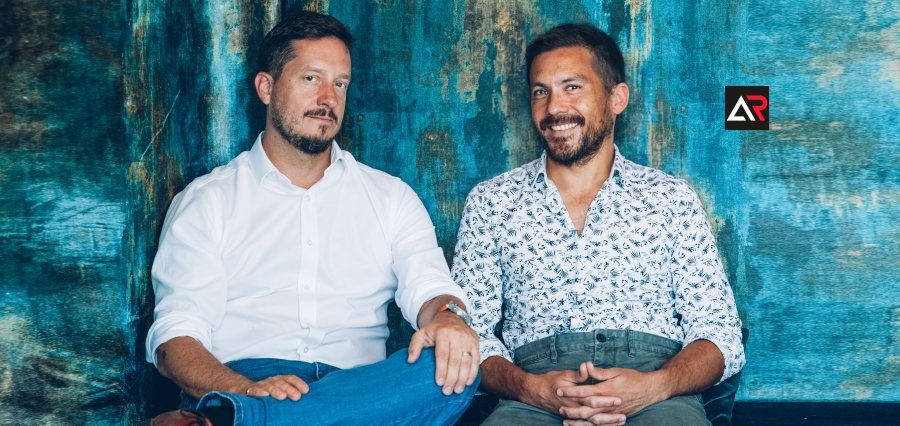
Most people think winter and desert don’t belong in the same sentence. Rodney Keher and Ben Elliott-Scott built a business proving otherwise.
For over a decade, their company DesertSnow has been creating winter experiences in one of the hottest places on earth. Real snow, ice skating, frozen festivals, all delivered in climates that regularly hit 50 degrees Celsius. It sounds impossible, but that’s exactly the point.
The events industry has moved beyond just creating wow moments. Clients in Dubai and across the Middle East need experiences that look spectacular but also run flawlessly, make commercial sense, and can handle thousands of visitors day after day. High stakes mean high standards. In a region where every city vies for prestige and audiences take the extraordinary for granted, experiences must be as effective as they are memorable.
DesertSnow operates right in this space. As Co-Founders and CEOs, Keher and Elliott-Scott didn’t just figure out the technical challenge of making snow in the desert. They built a business around it. One that balances creativity with engineering, emotion with logistics, and spectacle with sustainability. Their success comes from understanding that the magic only matters if it can be repeated, scaled, and delivered consistently.
Let’s explore how creativity, engineering, and human-centered design can transform impossible ideas into extraordinary experiences in any environment!
Non-Linear Paths, Shared Pressure
Rodney’s journey into the world of large-scale experiences did not follow a conventional corporate trajectory. His early professional life was immersed in music and nightlife, working as a DJ and promoter throughout his twenties and early thirties. Those years were defined by long nights, human energy, and the visceral understanding of how environments shape emotion. Music was not simply sound; it was atmosphere, timing, and flow.
That instinct eventually carried him to Berlin, a city synonymous with creative experimentation, where he aimed to push that career further. The move was intentional, driven by curiosity and a desire to be closer to the cultural pulse he had always gravitated toward. Yet, as often happens, the most defining turns came unexpectedly. A phone call from a friend opened a door to Dubai, offering an event manager role at a hotel. The decision was fast, pragmatic, and transformative.
Dubai introduced a new kind of pressure. The pace was relentless, the stakes higher, and the margin for error thin. It was there that Rodney met Ben, whose background contrasted yet complemented his own. Ben came from design and marketing, trained to think visually, structurally, and strategically about how people encounter ideas in physical space. Their collaboration began in early 2010, just after the global financial downturn, when the city itself was recalibrating.
Budgets were constrained, but expectations remained elevated. Events could no longer exist purely as spectacle; they had to justify themselves commercially, drawing measurable value for hotels and venues fighting to regain momentum. Working side by side in this environment forced both men into an accelerated education. They learned how choices affect every part of an operation, how creative ideas are shaped by real-world limits, and how pressure sharpens what truly matters.
Equally important, they discovered a shared discomfort with rigid corporate culture. The formality and hierarchy that often accompanied large organisations felt misaligned with how they preferred to think and work. When their contracts ended, that mutual restlessness became the foundation for something new.
The Accidental Beginning of a Niche
The spark behind DesertSnow did not come from a formal plan or a polished launch. It started with a simple observation and the confidence to act on it. During a New Year’s Eve event, snow machines were used to create a brief winter moment in the desert. After the event, Ben noticed that the supplier had no local presence in the region.
He suggested a straightforward idea. Bring that capability to the Middle East and see where it could lead. Rodney, with no fixed projects at the time, agreed to get involved. Things moved quickly. One job became three, three became ten, and before long it was clear they had found a niche that was unusual but powerful.
Creating winter effects in one of the hottest places in the world caused immediate disbelief. That feeling, something that should not exist but clearly did, became central to their appeal. The work relied on surprise and contrast, which suited a market driven by the need to stand out.
This early momentum aligned with a partnership with Snow Business in the UK. The company had decades of experience in film and television, specialising in creating snow that looks perfect on camera. That knowledge had rarely been applied to large public experiences in the Middle East. The fit was instant. DesertSnow took shape at the meeting point of strong operations, design thinking, and a clear gap in the regional market.
The early ambition was intentionally simple. As Ben later said, “When the opportunity came to partner with Snow Business and bring film-level snow effects into a live event environment, it immediately clicked.” That clarity helped them move fast, learn as they went, and deliver experiences that felt genuinely new to the market.
From Novelty to Maturity
In the early years, the business relied heavily on improvisation. Projects often came in at the last minute, equipment was brought in job by job, and logistics were worked out as they went. The priority was to make bold ideas happen, agreeing first and solving the details later. This helped build momentum, but it also exposed clear limits.
As demand increased, projects became more complex. What started as standalone effects grew into full experiences that needed long-term operation, ongoing maintenance, and strict safety management. The founders realised that novelty on its own would not be enough to support long-term growth. The next stage required maturity.
Systems were put in place, teams grew, and partnerships became more structured. Specialists were hired in areas where outside expertise was stronger than trying to do everything in-house. This marked a clear turning point. The quality of work improved, risks were reduced, and both founders gained the space to focus on strategy instead of constant problem-solving.
Today, the business is defined less by snow itself and more by contrast. Its strength lies in taking something that feels out of place and making it work in a practical, safe, and financially sound way. This approach now extends beyond climate into culture, scale, and audience expectation.
Yin, Yang, and Constructive Tension
The partnership between Rodney and Ben is built on contrast. Rodney’s strengths sit in flow, people, and delivery. He focuses on planning, building teams, and making sure ideas move smoothly from concept to execution. His role is to create clear structures that give creativity room to grow without becoming unstable.
Ben, on the other hand, is driven by problem-solving and systems thinking. He is comfortable working through complexity and often pulls ideas or technologies from one field and applies them to another when it improves the experience. Where Rodney brings stability, Ben pushes limits.
Their working relationship is not designed to be smooth at all times. Disagreement is welcomed rather than avoided. After more than fourteen years of working together, they have learned how to challenge each other in a constructive way. Practical delivery and emotional impact are always discussed together, so ideas remain both achievable and meaningful.
This balance shapes how they approach innovation. As Ben puts it, “The magic is that we don’t always agree, deliberately.” That tension strengthens ideas and ensures they can stand up to real-world pressure before being shared with a client.
Innovation Through Partnership
For them, innovation is rarely about creating brand-new technology. It is about bringing proven solutions together in new and unexpected ways. They are careful about who they partner with, often working alongside market leaders with decades of experience and a strong global presence. This approach lowers risk while opening up more creative possibilities.
By combining world-class systems with a cross-modal design approach, they make sure experiences are not just impressive, but also practical and long-lasting. Longevity is essential. Installations need to withstand heavy public use, harsh environments, and changing priorities without losing what makes them special.
This way of working also gives them flexibility in how they support each project. Depending on the brief, they may lead the design, act as specialist advisors, or step in later to protect the idea through feasibility checks and value engineering. Collaboration, rather than competition, sits at the centre of their market position.
Turning a Boeing 777 into a Playground
Among the many projects delivered over the years, one became a clear turning point. For Riyadh Season, the brief sounded simple on paper. Take a decommissioned Boeing 777 and turn it into an adventure park. In practice, it was anything but simple.
From the first conversation to the final concept, the entire process unfolded in just a few months. The aircraft was transformed into the centre of an eleven-attraction micro theme park. It included climbing features, areas designed for children, tubing slides, elevated walkways across the wings and fuselage, and fully immersive experiences inside the aircraft. The operational challenges were demanding and constant, covering safety, visitor flow, climate conditions, and tight deadlines.
Delivering a project of this scale on time and within budget changed how the company was seen. It proved their capability extended far beyond winter effects and positioned them as a trusted partner for large-scale attractions working with sovereign-level clients.
For Ben, the design challenge was about changing how people normally experience an aircraft. Planes are usually functional spaces with strict limits on movement. By turning that idea on its head, the project tapped into a sense of childlike curiosity. Guests could stand on the wing, climb the tail, move freely through the structure, and even use an emergency slide. What is usually off-limits became the experience itself.
This way of thinking reflected a wider goal. To be involved early enough to shape the full experience, rather than adding layers to decisions that had already been made.
Calm in a Fast-Moving Market
Dubai and the wider region are defined by speed. Timelines compress, briefs evolve, and stakes remain high. In this environment, differentiation often comes down to behaviour under pressure. Rather than adding drama, the founders prioritise removing it.
Honesty plays a central role. When ideas are not feasible, they say so, but always with an alternative path forward. Solutions are landed in places that remain exciting, safe, and achievable. This balance has fostered long-term client relationships built on trust rather than spectacle alone.
As Rodney notes, “A major differentiator is how we show up under pressure.” That presence, calm and solution-focused, has become as valuable as any technical capability.
Lessons from Early Challenges
The early years were marked by reactivity. Scaling without structure placed strain on both founders. Attempting to do everything themselves slowed growth and increased risk. The turning point came with delegation and trust.
By bringing in specialists earlier, they elevated output quality and reclaimed bandwidth for strategic thinking. For Ben, communication emerged as a critical lesson. Design decisions affect not just outcomes but the people installing, operating, and using systems. Good design simplifies complexity and respects every stakeholder involved.
This respect extends to clients as well. Transparency and authenticity guide difficult conversations. When projects deviate from plan, options are presented clearly and early. Over fourteen years, despite inevitable challenges, delivery has remained consistent. As Ben reflects, “One of our core values is authenticity.”
Creativity First, Constraints Second
Balancing creativity with operational and business realities requires careful timing. As Ben explains, “Creativity and practicality are both essential, but timing is everything. If constraints come in too early, they limit exploration.” At DesertSnow, they deliberately separate the two phases: creativity comes first, free from budgets or feasibility filters, allowing ideas to develop fully. Once the concept is clear, Rodney steps in to bring practicality into the process, refining without diluting the vision.
As he puts it, the goal is never to kill ideas but to evolve them, simplifying systems while protecting impact. When creativity and delivery respect each other, the result is experiences that feel both magical and buildable.
Watching the Industry Evolve
Looking outward, Ben observes that markets such as Saudi Arabia approach experience design in cycles. Appetite can be intense but temporary, making depth and longevity critical. Projects rooted in narrative, cultural relevance, and operational reality endure longer than those driven solely by digital novelty.
Rodney finds encouragement in the growing focus on sustainability. Smarter materials, efficiency, modularity, and longevity are becoming non-negotiable. This shift aligns naturally with how the company has always worked, reinforcing values rather than forcing change.
Culture, Ownership, and Trust
Inside the business, motivation starts with values-based hiring. Skills are important, but cultural fit matters just as much. The structure stays flat, ownership is encouraged, and psychological safety is taken seriously. As Ben reflects, “Look after your people. Designers, in particular, don’t do their best work under fear or constant pressure, as that just leads to burnout. Generosity comes with risk, but it’s a game worth playing. When it works, people do their best thinking. When it doesn’t, it usually means we didn’t hire the right people, not that generosity was the wrong choice.” People are trusted to explore ideas without fear of failure.
Alternate Paths and Shared Instincts
Asked what they might be doing if not running the business, Ben imagines himself still designing and building, likely in a workshop, solving problems through physical creation. The format matters less than the act of making.
Rodney envisions continued collaboration in areas aligned with his values, building and nurturing people and projects. Work, in that scenario, would still feel less like obligation and more like expression.
Advice Earned Through Experience
Their guidance to aspiring entrepreneurs is grounded in realism. Get help early in areas of weakness. Focus on strengths and bring in those who outperform you elsewhere. Sustainability depends on this humility.
Exposure is equally important. Trying different roles, understanding what energises you, and building a reputation through reliability shape long-term success. Promises kept matter more than ideas pitched.
Reflection Without Regret
Looking back, both agree that expanding the team earlier would have made scaling easier. Bringing in specialists sooner could have sped up progress. Still, they take pride in the foundation they built, growing organically, without debt, and maintaining full ownership.
Earlier investment might have accelerated some developments, but the biggest change came from learning to delegate and building a strong platform rather than trying to control every detail themselves.
Mantras That Endure
At the core of their leadership philosophies are simple, clear beliefs. For Rodney, it is the question, “Where is the gift?” a reminder that opportunity often hides within challenge. For Ben, the focus is on people. Generosity, even when risky, creates the conditions for strong thinking and lasting creativity.
Together, these principles have shaped a business that thrives on contrast, grounded imagination, and human-centered design, showing that even in the harshest climates, something unexpected can grow and succeed.